As an Amazon Associate I earn from qualifying purchases.

The Best Massage Chairs for Back Pain: Find the Right One for Comfort, Relief, and Real Relaxation
A therapist-informed guide to the best massage chairs for back pain, breaking down which styles offer real comfort, relief, and long-term value—and who each chair is best for.
2/9/20268 min read


Massage Chairs for Back Pain Relief
Therapist-Informed Picks for Comfort, Intensity & Everyday Recovery
Massage chairs aren’t just luxury furniture anymore. They’re a legitimate at-home recovery tool for people dealing with back pain, stiffness, and long days that take a toll on the body. A well-designed massage chair uses rollers, airbags, heat, and recline positioning to reduce muscle tension, encourage circulation, and help your nervous system downshift into recovery mode.
A massage chair is basically a recliner with a built-in mechanical massage therapist. Rollers travel along your back while airbags “hug” areas like shoulders, arms, hips, calves, and feet. People use them for the same reasons they’d book a massage: to reduce muscle tension, relax, and take the edge off aches. Health-focused outlets note that massage chairs can help relieve pain related to chronic tension and promote relaxation through features like shiatsu-style rollers, heat, and compression.
For Bounce Back, I built this list by cross-checking hands-on editorial testing (including Health.com’s expert-tested roundup), manufacturer specs, and the features that clinicians most often care about for back pain routines: adjustable intensity, heat, track length (S/L/SL), and “zero gravity” reclining.
Instead of ranking, each chair gets a “best for…” profile so you can pick based on your needs (space, sensitivity, heat, intensity, height, etc.).
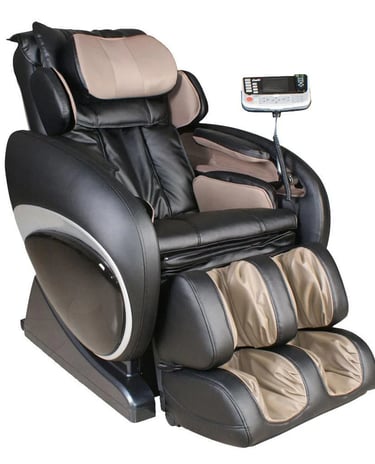
Osaki OS-4000
Best for first-time chair buyers
Typical price: from $1,699–$3,999 depending on seller and model
Why it’s here: This model shows up again and again in expert roundups because it hits the fundamentals: body scanning, zero gravity recline, and heating—without jumping into luxury pricing. Health.com’s testing specifically highlights its full-body scan, heated lumbar area, and zero gravity feel. If you’re new to massage chairs, this is a strong “start here” option because it’s easier to live with day-to-day than ultra-complex flagship models.
Features (and what they’re for):
Computerized body scan — aligns rollers/airbags to your body so the massage hits the right zones.
S-track roller system — follows the natural curve of your spine for more consistent contact.
Two-stage zero gravity — reduces the feeling of spinal compression by recline positioning.
Heated lumbar — warmth to help muscles relax and feel less guarded.
Best for: most households, first-time chair buyers, and people who want strong core features without a “pilot’s cockpit” learning curve.
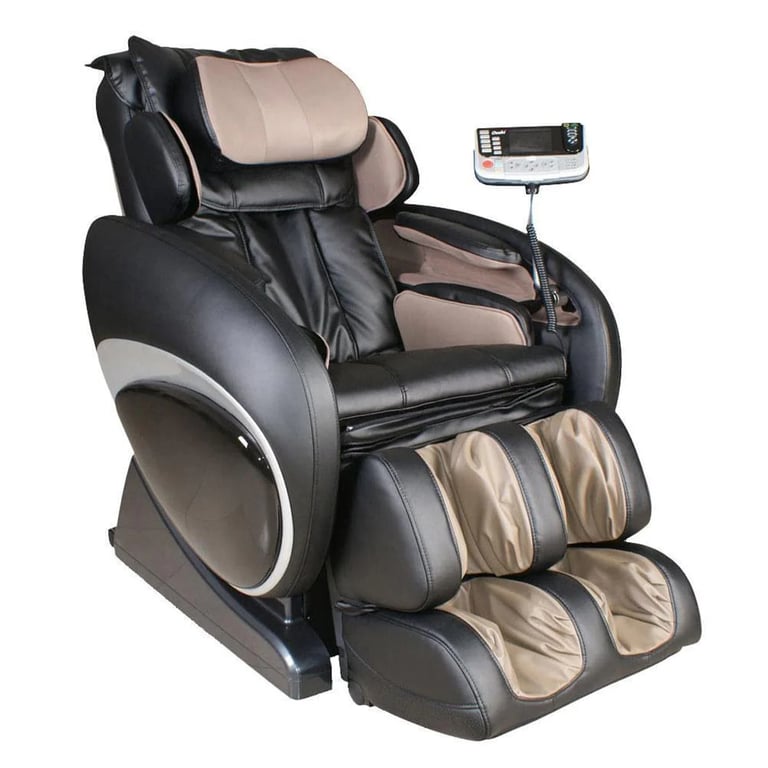
Source: massagechairplanet.com
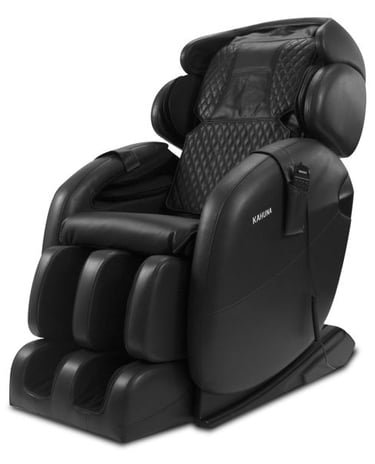
Kahuna LM-6800S
Best for stretching and decompression vibes
Typical price: varies widely by retailer; often in the mid-range for full chairs.
Why it’s here: If you’re the person who feels better after a deep stretch—especially hips and hamstrings—this chair’s identity is “stretch programs.” The brand highlights yoga/stretching style auto programs and multiple zero gravity positions. Reviewers often call out the “Yoga Stretch” concept as a differentiator, aiming to create a traction-like feel through chair movement and airbag sequencing.
Features (and what they’re for):
L-track massage system — extends roller travel farther down toward glutes/upper legs than basic S-track chairs.
Yoga/stretch programs — stretch-focused routines intended to reduce the “compressed” feeling.
Three zero gravity positions — more recline options to find your sweet spot.
Body scan + air-cell system — adjusts and compresses multiple regions for a “full-body reset.”
Best for: people who love stretching, desk workers with tight hips, and anyone who wants a chair that feels like it’s “opening” the body rather than just kneading it.
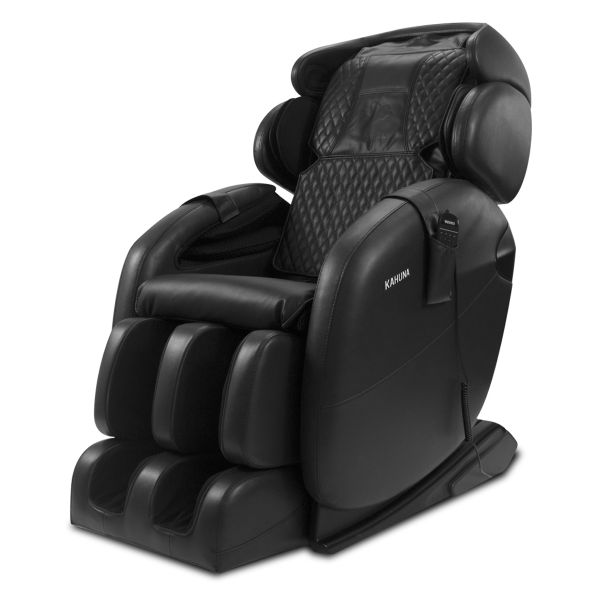
Source: easymassagechair.com
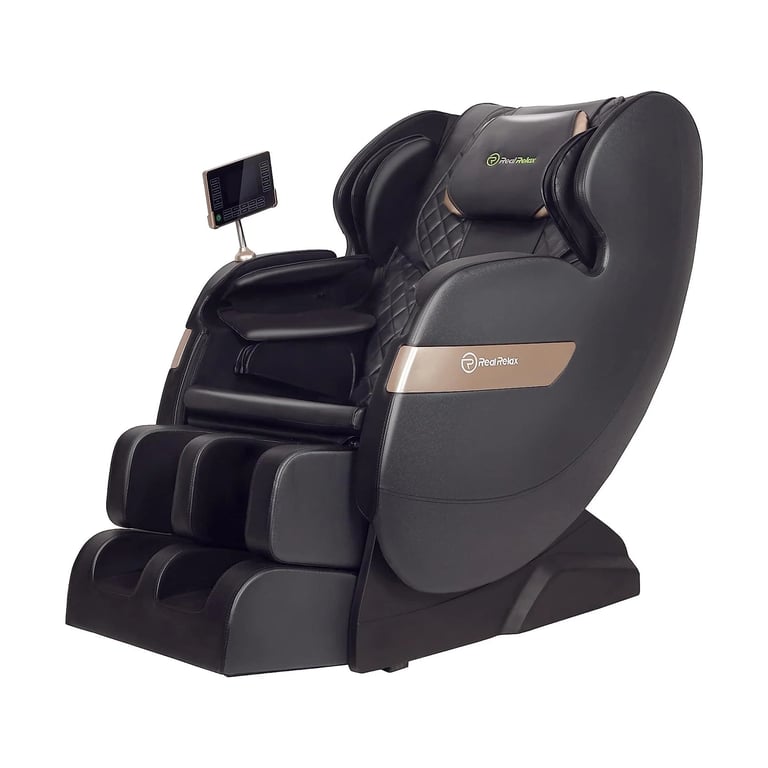
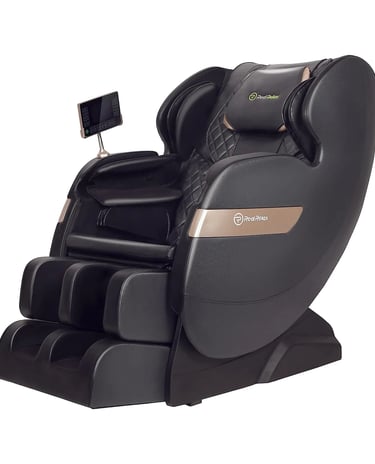
Real Relax 2026 Zero Gravity
Best for budget-friendly comfort (and small-to-average frames)
Typical price: around $1,499 (common list pricing).
Why it’s here: This chair is frequently mentioned as a value pick in mainstream review sites, and it’s often described as gentle with solid lumbar support and a useful zero gravity mode—though reviewers note the heat may feel mild compared to pricier chairs. One important note: some brand info suggests it’s designed with smaller users in mind (so tall users should double-check fit).
Features (and what they’re for):
One-touch zero gravity — quick repositioning to reduce pressure feel and deepen relaxation.
S/SL-style track + dual-core mechanism — aims for continuous coverage from neck downward.
Waist/back + calf heat — warmth to ease stiffness (often gentle).
Airbags + foot rollers — compression and foot work for full-body “ahh.”
Best for: budget-conscious buyers, people who prefer gentler massage, and small-to-average body sizes who want a lot of features for the money.
Source: realrelaxmall.com
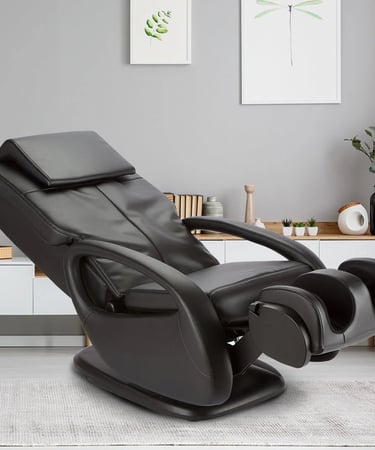
Human Touch WholeBody 7.1
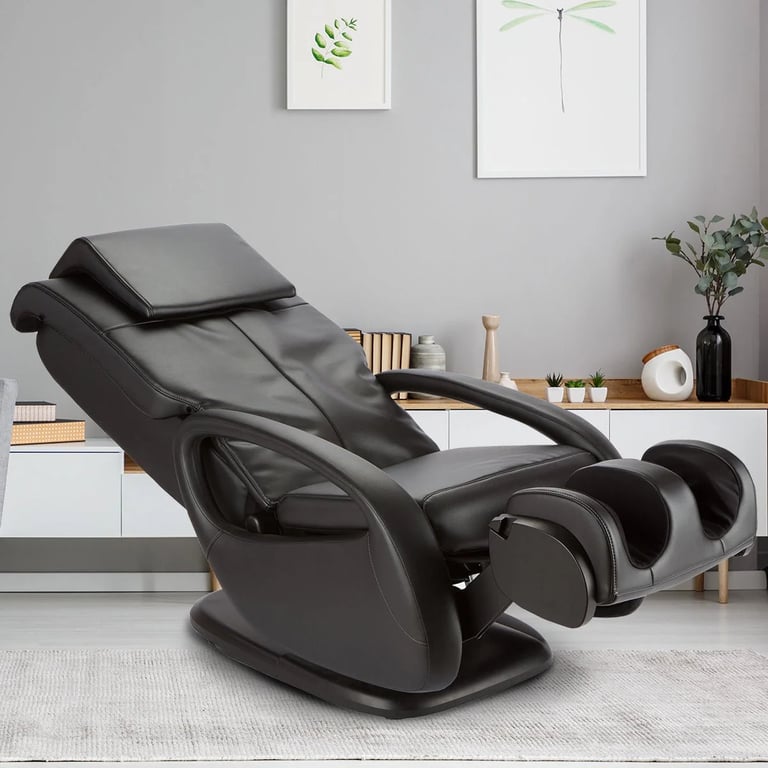
Best for “looks like a recliner” comfort
Typical price: about $2,699.
Why it’s here: Some people want pain relief—without turning the living room into a spaceship. WholeBody 7.1 is designed to blend into home décor more like a recliner while still delivering real massage features. The brand highlights FlexGlide technology and warm-air tech, plus targeted mapping controls. It’s also commonly featured in “best massage chair” editorial roundups, including as a fit-friendly choice for taller users.
Features (and what they’re for):
FlexGlide massage tech — smoother contact designed to feel less “jabby.”
Warm-air technology — gentle warmth to support relaxation and reduce muscle tension.
BodyMap PRO controls — helps you pinpoint where you want attention.
Swivel base + retractable ottoman — practical comfort features for daily use.
Best for: people who want a chair they’ll actually keep in the main room, those who prefer a smoother massage feel, and anyone who values “comfort-first” design.
Source: humantouch.com
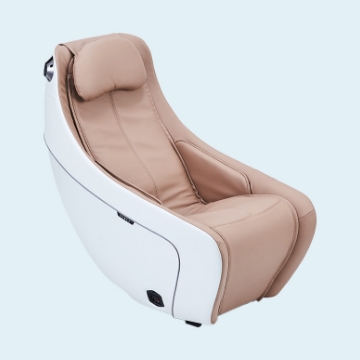
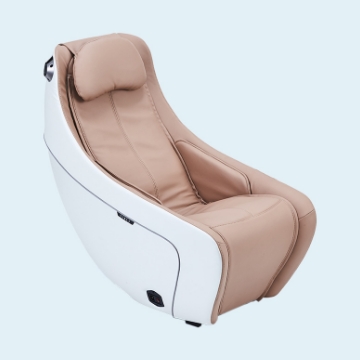
Synca CirC (MR320)
Best for small spaces and apartment living
Typical price: often $999 (commonly listed).
Why it’s here: Not everyone has a spare “massage chair room.” CirC is built for small footprints, lighter weight, and design-forward spaces, while still offering heat and a track that reaches from upper back down toward the thighs. If you want something that doesn’t dominate your room (or your doorway during delivery), this is the pick.
Features (and what they’re for):
Compact round-body design — easier placement in tight spaces.
L-shape rail (long stroke) — coverage from upper back toward hamstrings.
Heat therapy (waist/back) — warmth for stiffness and relaxation.
Course-based controller — simple routines without a complicated interface.
Best for: small homes, apartments, minimalists, and anyone who wants “daily-use relaxation” without a huge footprint.
Source: fujiiryoki.com
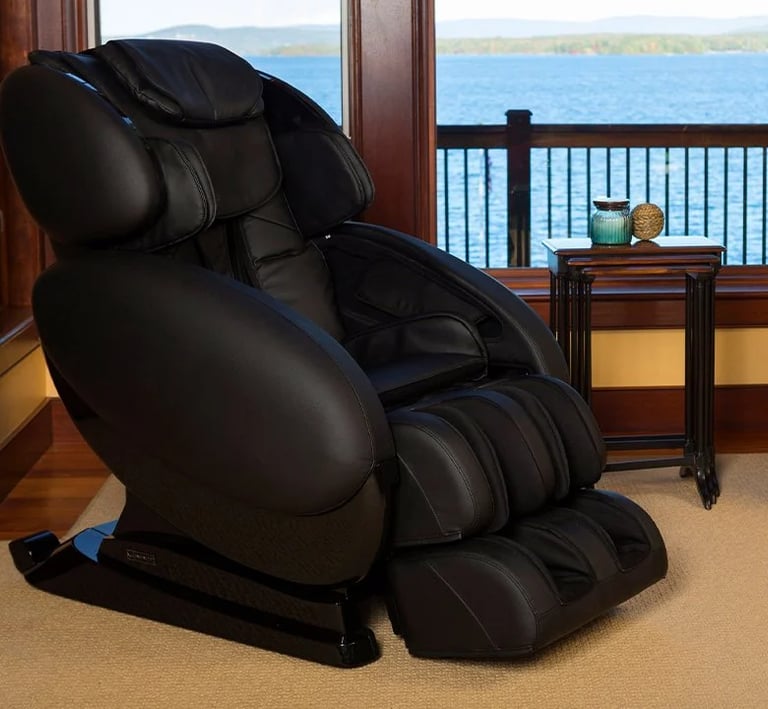
Infinity IT-8500 X3 (4D)
Best for intense features and high-end spinal stretch
Typical price: about $9,499.
Why it’s here: This is the “go big” option: 3D/4D roller tech, advanced stretching, and a feature set that’s aimed at people who want a true flagship experience. The manufacturer emphasizes spinal decompression stretch, a near-flat S-track for stretching, lumbar heat, large airbag systems, and reflexology-style foot rollers.
Features (and what they’re for):
4D massage technology — deeper, more variable pressure and rhythm for “hands-like” feel.
Spinal decompression/stretch + true inversion option — designed to create a lengthening/traction sensation.
Lumbar heat + large airbag system — warmth + compression for full-body relaxation.
Triple foot rollers + Bluetooth/app — foot relief and modern controls.
Best for: serious recovery routines, people who want intense feature sets, and those who like stretch + high-tech customization.
Source: massagechairstore.com
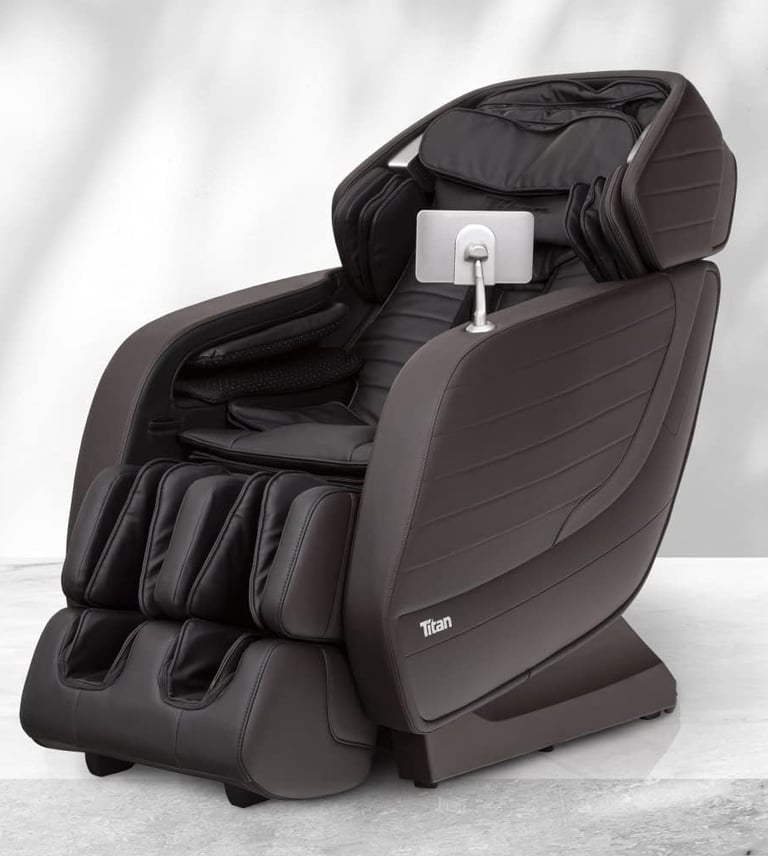
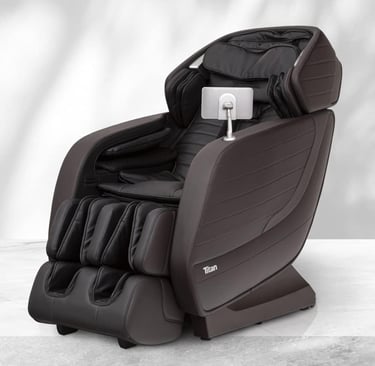
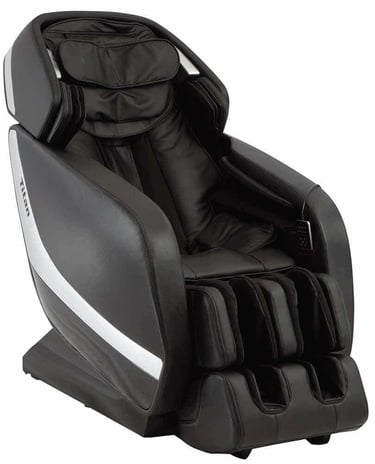
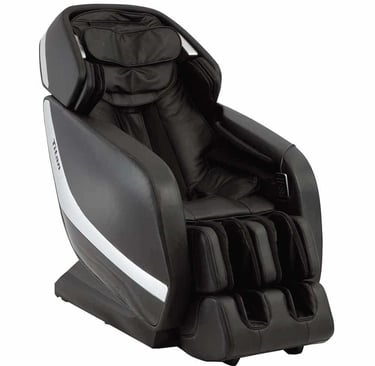
Titan Jupiter LE Premium
Best for tall people and strong intensity
Typical price: commonly listed around $3,799 (varies by retailer and delivery).
Why it’s here: Fit matters. A chair that doesn’t match your height can turn “relaxing” into “why is this kneading my shoulder blade like it owes money?” Jupiter LE is marketed specifically toward taller users, with a long L-track and higher weight/height accommodation ranges. It also leans into stronger intensity features like 3D rollers and robust airbag coverage.
Features (and what they’re for):
3D L-track (long track length) — reaches down past the glutes for bigger coverage.
XL-friendly sizing — designed to accommodate taller users (often quoted up to ~6'6").
Space-saving recline + zero gravity — easier room placement and deeper recline comfort.
Lumbar/seat/calf heat + foot rollers — warmth and foot relief for full-session comfort.
Best for: tall users, people who like stronger pressure, and anyone who wants “big chair, big coverage.”
Source: massagechairheaven.com
Safety & Smart Use
Massage chairs are designed for muscle relaxation—not medical treatment. Avoid use if you’ve had recent surgery, have severe osteoporosis, or an acute injury unless cleared by a healthcare professional. Start with low intensity, limit sessions to 15–20 minutes, and avoid discomfort that lingers into the next day.
Best for: YOU
There’s no single product that “fixes” back pain—but the right massage chair can make daily recovery easier, calmer, and more consistent. Think of it as support, not a shortcut. The best results come when tools like these are paired with movement, strength, and habits that support your spine long-term.
If you want help choosing the right chair, understanding how to use it safely, or building a routine that actually works for your back pain, join the Bounce Back community. Ask questions, share experiences, and get guidance rooted in both science and real life.
You don’t have to navigate back pain alone — and you don’t have to guess your way through it either.
FAQ: 5 questions people ask most about massage chairs
Do massage chairs actually help back pain?
They can help with the muscle-tension side of back pain—stiffness, tight hips, stress-held tension, and recovery after activity. Editorial medical outlets note massage chairs may reduce muscle tension and help relieve pain while promoting relaxation. If you have nerve symptoms (numbness, shooting pain, weakness), a chair can still feel good—but it shouldn’t replace evaluation and a plan.
How long should a massage chair session be?
Many expert guides suggest starting around 15–20 minutes, then adjusting based on how you feel later that day and the next day. A good rule: if you feel sore or flared afterward, reduce intensity or time.
What features matter most for back pain relief?
Look for a track type (S/L/SL), heat, zero gravity, and adjustable intensity. Health.com specifically highlights track types, air compression, heat therapy, and smart controls as key considerations.
Is heat worth paying for?
For many people, yes—heat can make a massage feel more tolerable and relaxing, especially when stiffness is part of the problem. Many chairs include lumbar heat; some extend warmth to calves/seat too.
Who should be careful or avoid massage chairs?
If you’re pregnant, have osteoporosis, a recent surgery, significant circulation issues, or an acute injury, it’s wise to talk with a clinician first. Health.com’s expert-reviewed guide notes caution for certain health conditions. When in doubt, start gentle or ask your provider.